Ireland Records Strongest Year for Start-ups in 15 Years

19/01/2026

New data released by CRIFVision-Net reveals that 2025 was a landmark year for Irish entrepreneurship, with 26,500 new companies formed, the highest figure in 15 years. 

This represents an 11% year-on-year increase, signalling a robust vote of confidence in the domestic economy despite global headwinds. 

Key Sector Growth: 

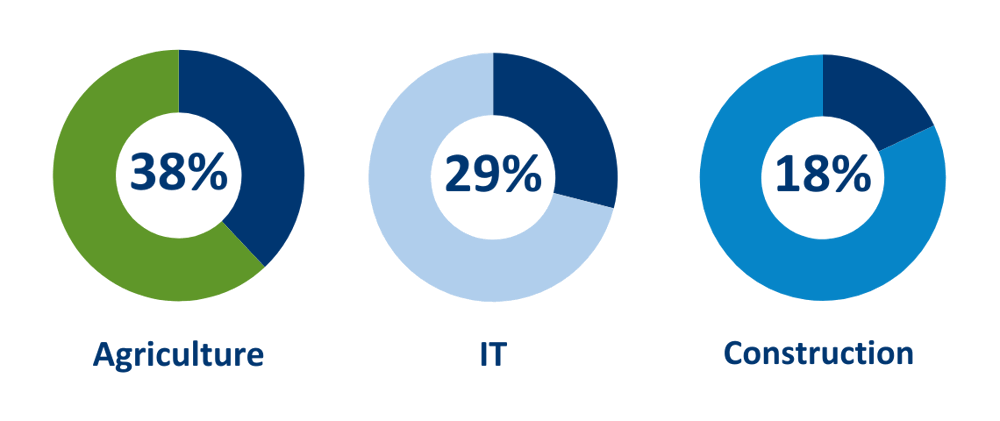
Agriculture (38%), IT (29%) and construction (18%) saw the largest year-on-year increases, reflecting the urgent demand for housing and infrastructure. Meanwhile, key sectors such as wholesale/retail (9%) and hospitality (5%), remained major contributors to the record-breaking figures. 
Regional Highlights: Entrepreneurship Beyond the Capital 

While Dublin accounted for over 40% of all new companies with 11,450 start-ups, there was growth across the country. Amongst the highest rate of startups included Cork added 2,552 new firms, followed by Galway (1,145), Kildare (1,124), and Meath (1,018). Desire to reduce reliance on global multinationals amid geopolitical uncertainty  

The 2025 figures exceed the previous post-Covid peak of 25,692 recorded in 2021.Traditionally, periods of record-low unemployment can dampen start-up activity; however, current trends point to a strong and growing appetite for indigenous enterprise.  

This reflects a strategic shift to reduce reliance on global multinationals amid heightened geopolitical uncertainty, global tariff concerns and evolving trade relationships. 

At the same time, tighter credit conditions, rising corporate stress, housing pressures, an ongoing cost-of-living burden and increased volatility in export markets may be contributing to elevated stress indicators. Without targeted support, this momentum could stall, leaving Ireland’s continued dependence on multinationals exposed. 

Christine Cullen, CRIFVision-Net Managing Director commented: The 2025 figures demonstrate remarkable resilience and entrepreneurial ambition across Ireland. While the surge in new start-ups is encouraging, it also underscores the importance of supporting established businesses facing rising costs and tighter credit conditions. By nurturing both emerging and existing enterprises, Ireland can sustain this momentum and strengthen its economy amid global uncertainties."

Signs of Strain: Corporate & Consumer Stress 

While the surge in start-ups paints a picture of a diversified and resilient economy, the CRIFVision-Net analysis also highlights a sharp rise in commercial judgments and mounting financial pressure on established firms suggest that targeted supports will be vital to sustain this momentum into 2026. 

CRIFVision-Net's data also revealed that 1,808 judgments against companies were recorded in 2025, totalling €47.2 million. This represents a 67% jump in value and a 29% increase in cases compared to 2024.  

This trend indicates that more businesses are struggling to meet payment commitments, forcing creditors to seek legal recourse. 

Commenting on the findings, Christine Cullen said the data highlights a widening gap between entrepreneurial activity and financial resilience: While it is encouraging to see strong levels of start-up formation, the rise in commercial judgments signals that many existing businesses are under significant financial pressure. More companies are struggling to meet payment obligations, which is increasingly forcing creditors to seek legal recourse. If rising costs, tighter credit conditions and export market volatility persist without adequate support, there is a real risk that today’s start-up momentum will not translate into sustainable long-term growth.”

Established businesses bear the brunt of insolvencies 

The average age of insolvent firms is 11 years, suggesting that established businesses, rather than young start-ups, are feeling the most pressure from rising costs and tighter credit. 

Many of these companies have already weathered previous economic shocks, but are now facing a more sustained combination of rising operating costs, higher interest rates and tighter access to credit. 

For mature firms with fixed overheads, long-term leases and legacy debt, the ability to adapt quickly is often limited, leaving them more exposed as margins are squeezed and cashflow pressures intensify. This trend points to a challenging environment for the core of the business economy, not just its newest entrants.